


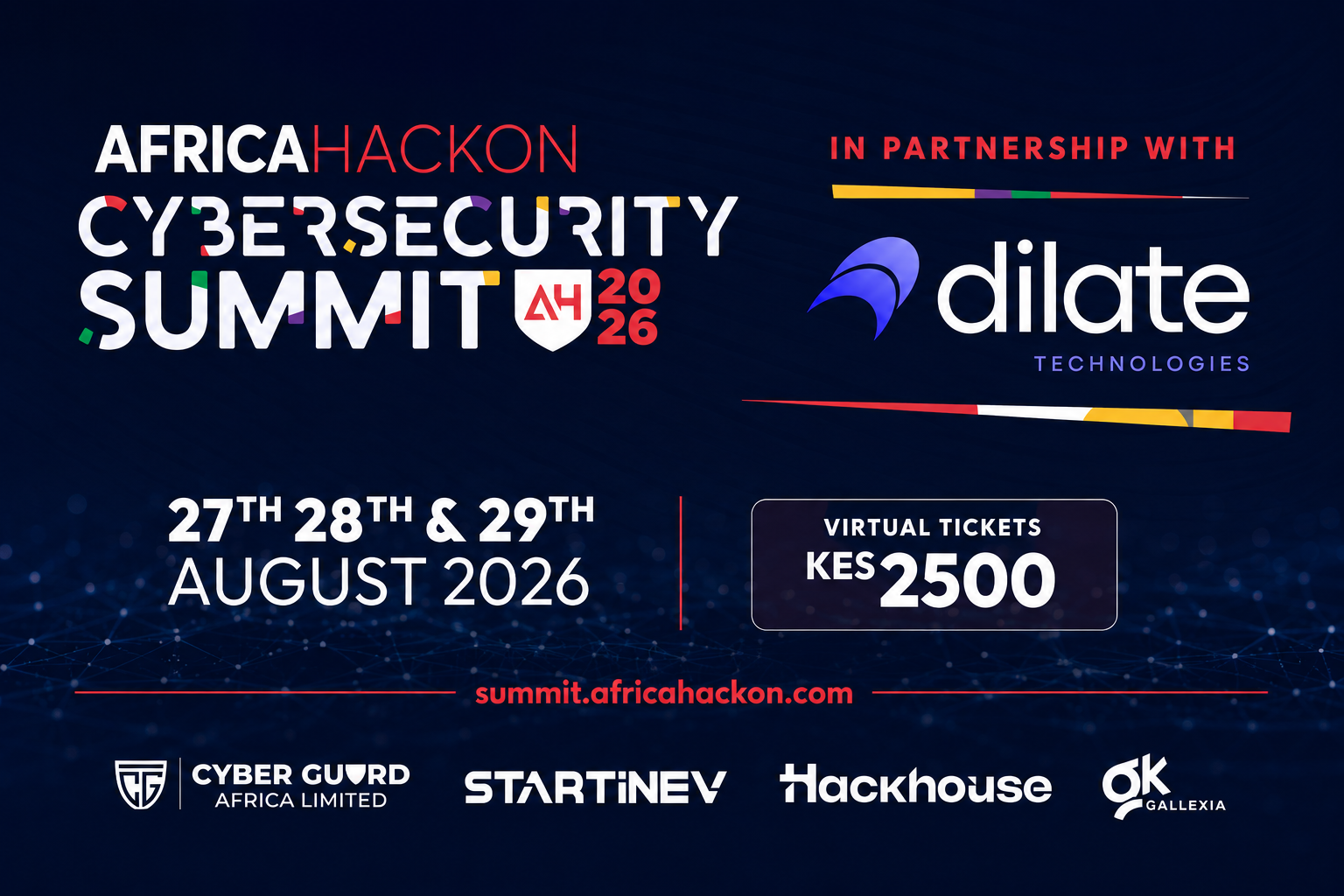
Cybersecurity professionals, ethical hackers, policymakers, innovators and aspiring technology talent are gathering in Nairobi for the AfricaHackon Cybersecurity Summit 2026, a three-day event focused on strengthening cyber resilience across Africa’s growing digital ecosystem.
The summit, holding from August 27 to 29 at Hackhouse Africa in Westlands, Nairobi, is built around the theme, “From Skills to Securing Systems.”
The 2026 edition is expected to move discussions beyond individual technical skills and hacking techniques towards the broader challenge of building and defending secure digital systems.
According to the event organisers, the summit will bring together professionals, policymakers and innovators to explore how cybersecurity expertise can be scaled to protect organisations and digital ecosystems against increasingly complex threats.
Three Days of Hacking, Workshops and Networking
The AfricaHackon Summit will feature three days of technical workshops, masterclasses, expert discussions, networking and live cybersecurity activities.
More than 50 speakers are expected to participate in sessions covering areas including threat intelligence, offensive security, application security, digital forensics, DevSecOps, cloud security, data protection, privacy engineering and artificial intelligence.
The first day focuses on cyber operations and threat intelligence, with hands-on workshops designed to explore practical approaches to cybersecurity investigations and operations.
Day two shifts attention to offensive security, application security and the AI frontier, with sessions examining penetration testing, ISO 27001, digital forensics, DevSecOps, smart contract auditing and emerging threats associated with artificial intelligence.
The final day will focus on defence, cloud security, governance and privacy, bringing discussions around data protection, identity security, vendor risks and securing AI systems.
Cybersecurity in the Age of AI
One of the key themes running through the summit is the growing impact of artificial intelligence on cybersecurity.
As AI becomes increasingly integrated into business operations and digital infrastructure, security professionals are facing new challenges around automated attacks, data protection, cloud environments and the security of AI-powered systems.
The summit’s agenda includes sessions on AI threat detection, cloud hardening, database security in the age of AI agents and hardening AI systems against potential vulnerabilities.
The event will also examine the role of governance, privacy and organisational resilience in building secure digital systems.
Building Africa’s Cybersecurity Talent
Beyond experienced cybersecurity professionals, the summit is also targeting students, junior developers and aspiring security practitioners looking to transition into cybersecurity roles.
Technical workshops will provide participants with opportunities to engage in hands-on learning and real-world security scenarios, while networking sessions are expected to connect emerging talent with experienced ethical hackers, CISOs, engineers and other industry professionals.
The organisers said the event is designed for a broad range of participants, including cybersecurity analysts, systems architects, IT managers, technology executives, policymakers, founders and aspiring cybersecurity professionals.
What’s Next?
The summit will conclude on August 29 with an open discussion on governance, privacy and building trust, followed by a closing ceremony and awards session.
With cyber threats continuing to evolve alongside rapid digital transformation and the growth of artificial intelligence, the AfricaHackon Summit 2026 is positioning itself as a meeting point for the people and ideas working to strengthen Africa’s cybersecurity ecosystem.
More information about the event is available on the AfricaHackon Cybersecurity Summit 2026 official website.