


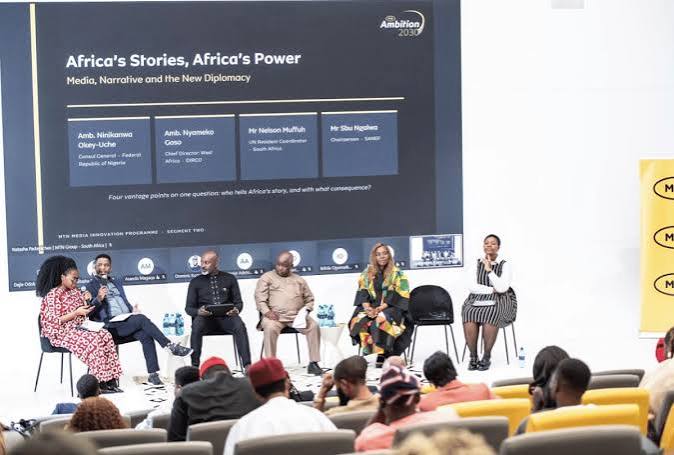
MTN, UJ, TAEF Launch Media Innovation Programme For 42 Journalists
MTN Group, the University of Johannesburg (UJ) and The African Editors’ Forum (TAEF) have launched the MTN Pan-African Media Innovation Programme, bringing together 42 journalists, editors and media practitioners from 10 African countries.
The six-week programme is designed to strengthen journalism and help media organisations respond to the rapid technological, commercial and audience changes reshaping the industry.
The inaugural cohort comprises practitioners from South Africa, Nigeria, Rwanda, Eswatini, Ghana, Côte d’Ivoire, Cameroon, South Sudan, Zambia and Benin.
The participants represent print, broadcast, digital and independent newsrooms, bringing together professionals working across different parts of Africa’s evolving media landscape.
The launch comes at a time when news organisations are facing significant changes in how journalism is produced, distributed and financed.
Artificial intelligence, changing audience behaviour, digital platforms and pressure on traditional revenue models are forcing newsrooms to rethink their operations while maintaining public trust, editorial independence and professional standards.
Programme Focuses On Media’s Digital Future
According to MTN, the initiative is intended to provide participants with the knowledge and practical experience required to navigate these changes and contribute to the development of stronger media institutions across Africa.
Nompilo Morafo, Chief Sustainability and Corporate Affairs Officer at MTN Group, said strong and independent media institutions remain important to the development of African societies.
She said the programme brings together professionals who already understand the challenges facing African newsrooms and can apply what they learn to improve their organisations.
“Strong and independent media institutions are essential to informed societies as well as to Africa’s progress.”
Morafo added that MTN was providing the platform and partnerships for the initiative, while the academic partners were responsible for the curriculum and selection of participants.
UJ Leads Academic Programme
The University of Johannesburg independently selected the fellows using professional and academic criteria.
The selection process considered participants’ professional track records, commitment to ethical journalism, their ability to influence their organisations and their interest in media innovation.
The programme was also structured to provide broad geographical and professional representation across MTN’s African markets.
Professor Sifiso Mnisi, Director of the Centre for Data and Digital Communications at UJ, said the programme would combine academic learning with the practical realities facing media professionals.
He said fellows would examine how technology, changing audience expectations and commercial pressures are affecting journalism and would take those lessons back to their respective newsrooms.
The approach is intended to ensure that the programme does not focus solely on theoretical discussions but also helps participants develop practical solutions to challenges within their organisations and the wider media industry.
Six Areas Of Study
The certified programme will run for six weeks through online academic study and will cover six major areas.
These include Pan-African media futures and storytelling; media innovation and entrepreneurship; digital transformation and platform economies; digital journalism, content strategy and analytics; media business strategy and sustainability; and media ethics, law and governance in the digital age.
The programme will also require each fellow to develop a practical innovation project addressing a specific challenge or opportunity within their newsroom or the wider media sector.
This project-based component is intended to help participants apply the lessons from the programme to real-world challenges rather than limiting the experience to classroom learning.
Building A Pan-African Media Community
Beyond the six-week academic programme, the organisers intend to establish a continuing community of practice connecting the participating journalists and media professionals.
The network is expected to allow fellows from different countries and media markets to exchange knowledge, develop professional relationships and collaborate on ideas after completing the programme.
The organisers believe such connections could help strengthen cooperation across African newsrooms and encourage the sharing of approaches to common challenges.
The initiative also comes as media organisations across the continent contend with the growing influence of global technology platforms, changing consumption habits and the rapid development of artificial intelligence.
These developments are changing how audiences discover news and how newsrooms produce and distribute content, while also creating new questions around revenue, credibility, ethics and editorial independence.
Programme Builds On MTN Nigeria Initiative
The Pan-African programme builds on the MTN Nigeria Media Innovation Programme, which was established in 2022.
That initiative combines academic study with practical exposure to institutions and issues shaping the African media environment.
According to the organisers, the fifth cohort of the Nigerian programme is also undertaking a week-long study visit to South Africa, where participants are engaging with representatives from academia, business, government and the media.
The expansion into a Pan-African programme represents a broader effort to create opportunities for media professionals across multiple African markets to learn from one another and respond collectively to changes affecting journalism.
A Call For More Impactful Journalism
Representing TAEF, Emmanuel K. Dogbevi, Vice President of the organisation, challenged the fellows to use the programme to strengthen the quality and impact of their journalism.
He pointed to challenges including pressure on democratic systems, attacks on press freedom and rapid technological change as issues that are affecting journalism across the continent.
Dogbevi, however, said these developments also create opportunities for journalists who understand their responsibilities and are prepared to adapt.
He urged participants to remain committed to facts, accountability and service to the public while making effective use of new opportunities created by technology.
The organisers said the ultimate objective is to support journalists and media institutions that can remain relevant in a rapidly changing digital environment while preserving the principles of professional and ethical journalism.
With 42 practitioners now representing 10 African countries, the programme is expected to provide a platform for cross-border learning and collaboration while equipping participants with practical tools for navigating the future of African journalism.