


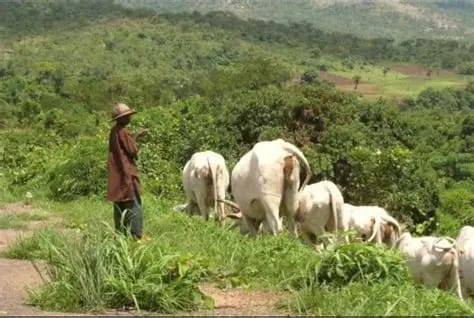
The Federal Government has unveiled plans to rehabilitate and utilize 470 gazetted grazing reserves across the country as part of efforts to modernize Nigeria’s livestock sector and gradually phase out open grazing.
The initiative is expected to support the resettlement of pastoralists, improve livestock productivity, and address long-standing challenges associated with uncontrolled cattle movement.
Government Identifies 470 Grazing Reserves
Speaking on the implementation of the National Dairy Policy Framework, the Minister of Livestock Development, Idi Maiha, disclosed that the government has identified hundreds of legally protected grazing reserves for rehabilitation.
According to him, the reserves will provide designated locations where pastoralists can settle and access government-supported livestock services.
The move forms part of broader efforts to transform Nigeria’s livestock industry into a more organized, productive, and commercially viable sector.
End of Cattle Roaming in Cities
The minister stated that the government is working toward ending the practice of cattle roaming freely through major cities and urban centres.
According to him, open grazing and long-distance cattle movement are no longer sustainable in a modern livestock economy.
He explained that settling pastoralists within designated grazing reserves would make it easier to provide veterinary services, monitor animal health, improve breeding practices, and enhance productivity.
The government believes that transitioning to a more sedentary system will also reduce conflicts associated with cattle movement and strengthen livestock management nationwide.
Technology to Improve Livestock Monitoring
As part of the reform programme, the government plans to introduce animal tracking technology.
Maiha revealed that cattle will be fitted with electronic identification tags to enable easier monitoring and tracking.
According to him, the system will help detect when animals leave designated grazing areas, making it easier to recover lost or stolen livestock while improving overall herd management.
The initiative is also expected to strengthen disease surveillance and animal health monitoring across the sector.
Nigeria’s Low Milk Production Remains a Challenge
The minister highlighted the country’s low dairy productivity as one of the major reasons for the reforms.
According to him, Nigeria currently records average milk yields of between 1.2 and 2 litres per cow daily, significantly below the production levels recorded in countries such as Kenya.
He attributed the low output to poor livestock genetics, inadequate feeding systems, and weak disease control measures.
The situation has contributed to Nigeria’s dependence on imported dairy products despite having one of the largest livestock populations in Africa.
Need for Improved Livestock Genetics
Maiha noted that Nigeria is home to an estimated 270 million ruminants, including cattle, sheep, goats, and camels.
However, he observed that the country has not made significant progress in improving livestock genetics compared to many other African nations.
According to him, while several countries have deliberately upgraded their cattle breeds over the years, Nigeria has largely maintained traditional breeds with relatively low productivity.
He explained that introducing improved genetics and selecting animals based on performance traits could dramatically increase milk yields and overall livestock efficiency.
National Dairy Policy to Drive Growth
To address existing challenges, the government is implementing the National Dairy Policy Framework, which focuses on three major areas: improved feeding systems, enhanced disease management, and genetic improvement.
Officials believe the policy will boost local milk production, reduce dependence on imports, create employment opportunities, and strengthen food security.
The strategy is also expected to attract private investment into the dairy value chain while improving the incomes and livelihoods of livestock farmers across the country.
Modernising Nigeria’s Livestock Sector
The government says the livestock reform agenda is aimed at transforming the sector into a key contributor to economic growth and agricultural development.
Stakeholders have expressed optimism that improved infrastructure, modern production techniques, and stronger livestock management systems could unlock the vast potential of Nigeria’s livestock industry.
If successfully implemented, the reforms could significantly increase dairy output, improve food production, and support the long-term sustainability of the country’s livestock economy.