


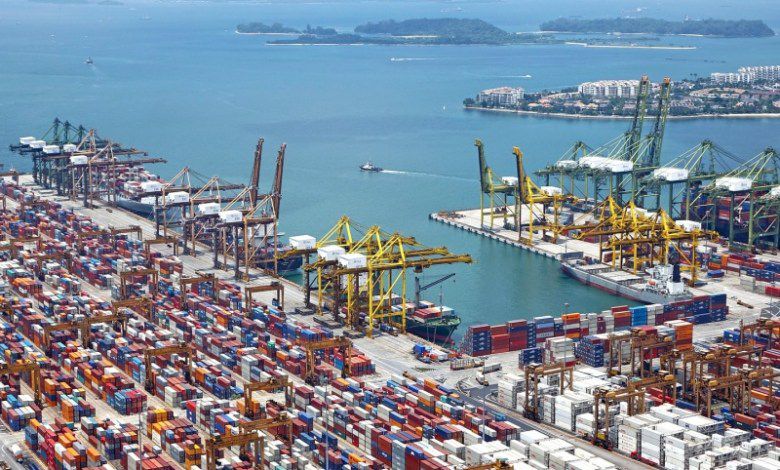
One of the most damaging things in public discourse is when people appoint themselves gatekeepers of what others are “allowed” to aspire towards.
Yes, this is a response to those gatekeeping our emotions and insinuating that having a deep sea port in the South East is not workable, and asking us to focus on pleading for a railway system instead. They cite the absence of a natural coastline and lack of access and/or proximity to the ocean as their reasons.
The response is borne out of a strong desire to correct this wrong narrative I have been seeing in several fora since the FG announced the approval of certification for five seaports in Lagos, Ondo, Akwa-Ibom, Cross River, and Rivers states.
The first thing you should know is this:
You must not have a sea or ocean shore to harbor a deep-sea port.
Some seaport infrastructure in parts of the South West were not deep enough at first. Lekki deep sea port involved massive dredging, breakwater construction and a lot of engineering work to make it deep enough for large vessels.
Apapa port and Tin can island port have also seen a lot of dredging and expansion works.
The entrance to Apapa Port originally had depths of only about 3.0 to 4.5 meters due to sandbars and shallow tidal waters, while the creeks around Tin Can Island averaged roughly 2.0 to 4.0 meters before land reclamation and dredging transformed them into navigable port channels. Similarly, the Lekki Deep Sea Port area naturally had offshore depths of about 13.5 to 14.0 meters, but was further dredged to 16.5 meters to accommodate larger modern cargo vessels.
These interventions and investments transformed those locations into viable maritime hubs.
If inland ports, dry ports, and other maritime channels can be developed elsewhere, then why is the South East being treated as if it is impossible?
States like Anambra, Abia and Imo have direct access and/or proximity to the coastline through rivers, and also form part of Nigeria’s only delta.
Oguta lake, which connects to several waterways, has a surface area of 2.1 km² and gets up to 2.5 km² at the peak of the rainy season. It has an average depth of 5.5 meters and varies between 7.0 to 9.3 meters during the peak of the rainy season.
Pleas to develop it have been shoved aside.
The part of the River Niger in Onitsha has a dry season depth of 5.0 meters, and gets up to 10.0 to 15.0 meters during peak rainfall periods.
Onitsha River port has been in a state of decay for decades, with numerous propositions to optimize and expand it falling on deaf ears.
These places are lying underdeveloped or comatose, not because they are impossible to develop, but due to total neglect from the Nigerian government; the same government that built a refinery in Kaduna without considering proximity to the natural resource that’d be refined, and sunk billions of naira into building pipelines. They did not remember these excuses you’re making for them now; they also did not remember that the North doesn’t have oil. They only give these flimsy reasons when it comes to developing the South East.
The issue therefore, is not geography; but priority, vision, and political will.
Now, for a region that has been sidelined and maltreated since the creation of the country, you can’t blame them if they get emotional. We have every right to be upset.
I also do not think it is right to abandon one issue because another is “more sensible” or “more realistic”. Multiple truths can coexist, and multiple agitations, complaints or pleas, can be made.
Do we need a modern railway system linking all the South East cities? Yes.
Can a sea port be sited in the South East? Yes.
So why can’t we go for both amenities?
Bencraft writes from the arable hills of Isuikwuato ✍🏽