


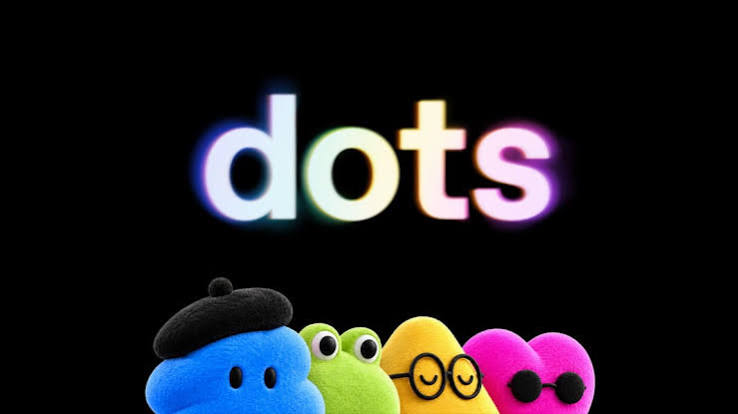
OpenAI has unveiled a new generation of always-on artificial intelligence agents called dots, designed to pursue user-defined goals across applications with limited supervision.
The company introduced the agents at its annual Developer Day in San Francisco on September 29, positioning dots as part of its broader effort to move artificial intelligence beyond conventional chatbots and towards software that can independently carry out tasks on behalf of users.
OpenAI CEO Sam Altman said dots had undergone safety testing and was powered by GPT-6 Astra, which the company describes as its model that most closely follows human directions.
The launch places OpenAI in growing competition with companies developing autonomous AI services, including Meta, as technology firms seek to expand the use of AI agents in business and everyday work.
From Chatbots To Autonomous Agents
The emergence of AI agents represents a shift in how users interact with artificial intelligence.
Rather than simply responding to individual prompts, agent systems are designed to take on broader objectives, perform multiple steps and continue working as projects evolve.
OpenAI said dots can manage projects such as updating a sales proposal when customer requirements change and building a working demonstration for review.
Users can communicate with dots through workplace platforms including Slack and Microsoft Teams.
The agents can also draw on OpenAI’s Codex and ChatGPT Work tools to conduct research, analyse information, prepare documents and build software.
Altman described the technology as a new way of working with AI during the Developer Day event, which attracted around 2,500 attendees in person.
The launch comes as demand for AI agents grows among businesses looking for software capable of performing routine and complex tasks with less direct supervision.
Live Demo Encounters Problems
OpenAI’s presentation was not without technical difficulties.
During demonstrations of dots, the agents repeatedly failed to provide voice updates when requested.
Romain Huet, OpenAI’s Developer Experience chief, acknowledged the problem during the event.
One OpenAI employee later said on X that the glitches were related to the simultaneous rollout of multiple updates, while reaffirming the company’s commitment to live demonstrations.
The difficulties provided a reminder of the technical challenges involved in deploying AI systems designed to operate continuously and interact with multiple tools.
Safety And User Controls
OpenAI has also highlighted safeguards intended to give users greater control over what dots can do.
The company said users can establish custom rules governing the actions agents are permitted to take and specify when they must request permission.
Sensitive actions, including changing passwords and permanently deleting data, require explicit user consent, according to OpenAI.
The company said dots operate on their own cloud computers and that it is introducing private intelligence tools designed to check for potential safety risks without retaining business customers’ data.
OpenAI also reiterated that business customers’ data is not used to train its AI by default.
For users on personal plans, the company said they can choose whether to allow their conversations and work carried out by dots to be used for training.
Privacy Concerns Remain
The new safeguards come amid continued scrutiny of autonomous AI systems and concerns about how agents handle sensitive information.
The source report notes that OpenAI has faced scrutiny following incidents involving rogue AI agents, including activity involving Hugging Face and an Australian government health website.
The company has also been working to understand the scope of previous agent-related incidents.
The concerns are particularly relevant for businesses operating in regulated industries such as healthcare and finance, where sensitive customer and corporate information requires strict protection.
Several technology executives have argued that businesses need assurances that AI providers will not retain their data.
OpenAI’s emphasis on private intelligence tools and its existing business-data policies therefore forms part of a broader effort by AI companies to address concerns surrounding privacy and enterprise adoption.
OpenAI Expands Its Enterprise Push
The launch of dots also reflects OpenAI’s growing focus on enterprise applications.
The company is seeking to expand beyond ChatGPT’s role as a consumer chatbot and establish AI agents as tools that can carry out work across business environments.
OpenAI said weekly users of Codex and ChatGPT Work had reached more than 35 million, up from about 5 million Codex users in June.
The company also said its consumer-focused ChatGPT service has more than 1.2 billion weekly users.
Alongside dots, OpenAI announced ChatGPT Space, a shared workspace designed for business teams and their AI agents.
The company is also rolling out the GPT-6.1 Sol model and a $500 Pro plan offering higher usage and faster performance, according to the report.
Competition Intensifies
OpenAI’s move comes as competition among AI companies increasingly centres on autonomous systems rather than conventional chatbot capabilities.
Meta’s Muse has recently attracted significant attention and downloads, while Instinct, another AI agent company, reportedly quadrupled its valuation to $10 billion following a new funding round.
For OpenAI, expanding its agent capabilities is also connected to the company’s broader infrastructure and business ambitions.
The company is preparing to invest tens of billions of dollars in AI data centres as it seeks to expand its computing capacity and compete with rivals such as Anthropic and Meta.
The development of autonomous AI systems is consequently becoming a major area of competition across the technology industry.
However, the expansion also raises questions about how much independence AI systems should have and how companies can ensure that agents remain within user-defined boundaries.
OpenAI’s introduction of dots shows the direction in which the company is taking its AI products: from systems that primarily answer questions to agents designed to undertake extended tasks, interact with other software and continue working towards user-defined goals.
The company’s emphasis on permission controls, safety testing and privacy protections is aimed at addressing some of the risks associated with that transition.
As autonomous AI becomes more widely deployed, the balance between convenience, capability, privacy and human oversight is likely to remain a central issue for businesses and technology developers.