


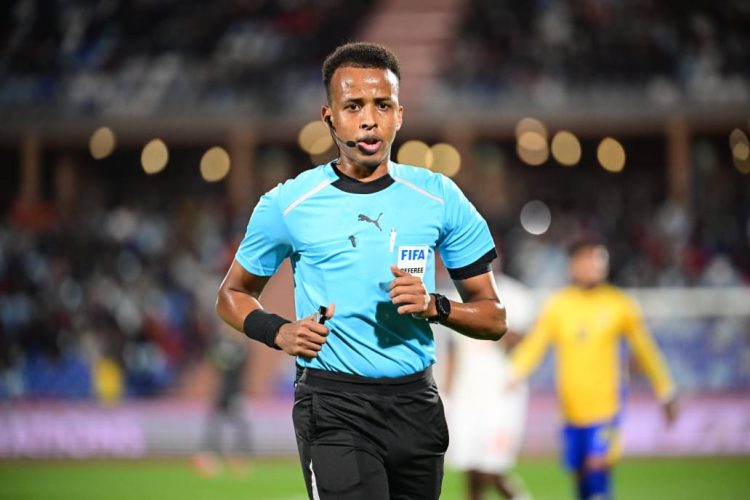
Somali referee Omar Artan has been left devastated after being denied entry into the United States, a decision that has cost him the opportunity to officiate at the FIFA World Cup.
Artan, who was named the Confederation of African Football (CAF) Referee of the Year in 2025, was removed from FIFA’s list of World Cup officials after US authorities refused him admission upon arrival in Miami.
The development has sparked reactions from football stakeholders and the Somali government, while adding to the growing political tensions surrounding the tournament.
Dream World Cup Opportunity Ends Abruptly
According to reports, Artan arrived in Miami on Saturday with the necessary travel documents and a valid visa ahead of the tournament.
However, after undergoing what was described as an extensive interview process with border officials, he was denied entry and placed on a return flight to Turkey.
Speaking to the New York Times from Istanbul, the Somali referee described the experience as heartbreaking.
Artan said officiating at the World Cup had been the greatest ambition of his career and expressed disappointment that the opportunity had been taken away despite possessing all required documentation.
He maintained that he had complied with all travel requirements and arrived in the United States fully prepared for his role at the tournament.
US Cites Security Concerns
A United States State Department official reportedly stated that Artan was denied entry because of alleged associations with individuals suspected of links to terrorist organizations.
According to the official, the concerns rendered him ineligible for admission under existing immigration and security regulations.
US Customs and Border Protection also confirmed that the referee was denied entry following a routine inspection process.
Authorities stated that the decision was based on vetting concerns but did not provide further details regarding the specific allegations.
FIFA Distances Itself from Decision
World football governing body FIFA acknowledged the situation but emphasized that visa issuance and border admission decisions fall solely under the authority of host governments.
A FIFA spokesperson noted that, as with previous international tournaments, the host nation retains the final authority over who is permitted to enter its territory.
The organization indicated that it had no power to override or influence the decision made by US authorities.
Somalia Expresses Disappointment
The Somali government reacted with disappointment to the exclusion of one of its most accomplished football officials.
In a statement, Somalia’s Ministry of Sports described Artan as a symbol of excellence and one of the country’s finest sporting ambassadors.
Officials expressed regret that the referee would miss the opportunity to participate in the world’s biggest football tournament despite his achievements and professional credentials.
Political Tensions Surround Tournament
The incident comes amid broader political and immigration-related controversies surrounding the FIFA World Cup.
Somalia remains among countries affected by travel restrictions introduced under US immigration policies, which have continued to generate debate internationally.
The World Cup has also been impacted by geopolitical tensions involving other participating nations.
Recently, Iran was forced to relocate its training base to Mexico due to ongoing tensions with the United States. Iranian football authorities have also reported visa challenges affecting some members of their delegation and support staff.
Focus Shifts to Tournament Kick-Off
Despite the controversy, preparations for the largest FIFA World Cup in history continue as teams, officials, and supporters arrive ahead of the tournament’s opening matches.
For Omar Artan, however, the dream of officiating on football’s biggest stage has come to an abrupt and painful end.
The incident has reignited discussions about immigration policies, international sporting events, and the challenges that can arise when global competitions intersect with national security concerns.